Highlights
| Monthly budget managed | $20,000 |
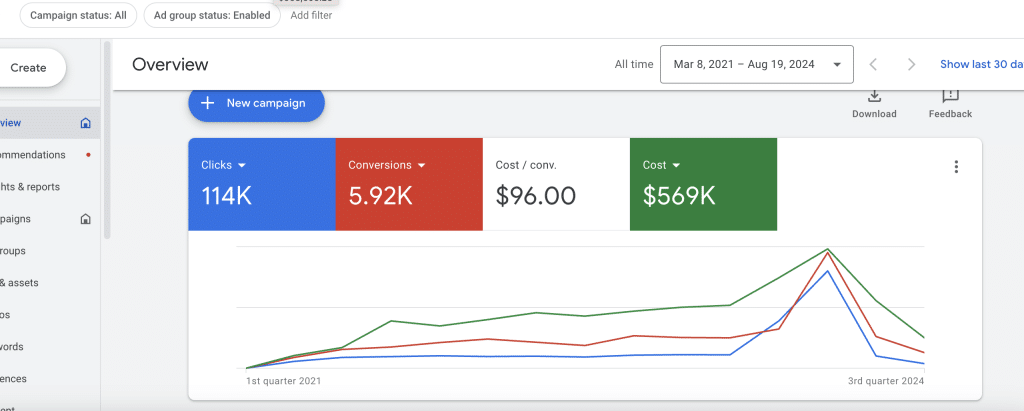
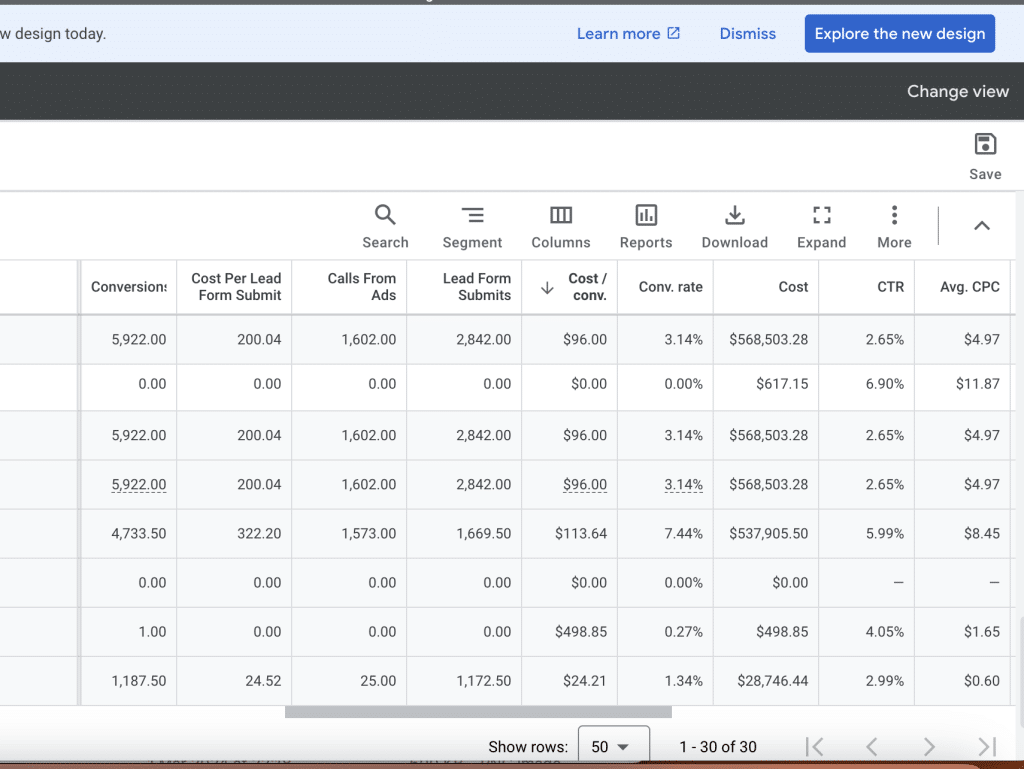
| Google Ads CPA (after) | $100–130 |
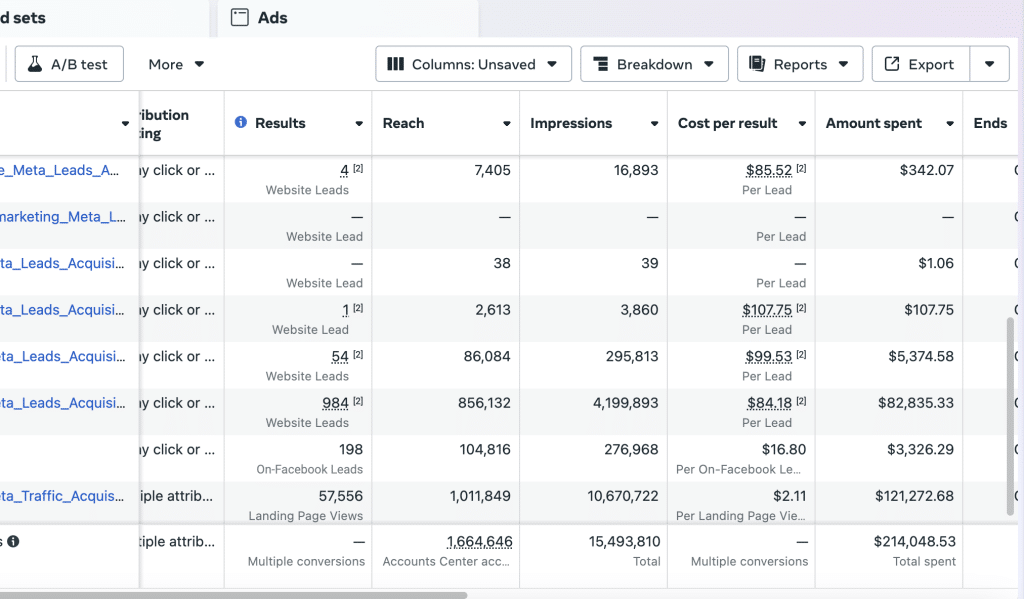
| Meta Ads CPA (after) | $80 |
| CPA reduction vs. baseline | −50% on Google · Additional scale via Meta |
| Estimated leads/month | ~250 leads |
01 · Context
LivSmooth is a laser hair removal specialist with 3 locations across Jacksonville, Oviedo, and Winter Garden, Florida. Their key differentiators are pain-free treatments using Motus laser technology and an “unlimited treatments for life” package — a compelling value proposition in a competitive US med-spa market.
Despite strong service quality and consistently positive reviews, the clinic’s paid advertising was underperforming. Google Ads CPA was high and unstable, and the underlying digital infrastructure — tracking, landing pages, and campaign structure — needed a full rebuild before any meaningful scaling could happen.
02 · Challenge
When I took over the account in June 2024, Google Ads CPA was running at $160–200 per lead, well above the client’s target of $130–150. The problems weren’t isolated — they were stacked across every layer of the funnel:
- Broken tracking — Pixel and tags were misconfigured, making optimization data unreliable
- Weak landing page — Low CVR, unclear CTA, insufficient trust signals and social proof
- Poor audience targeting — Broad targeting with no structured segmentation or remarketing
- Ineffective creatives — Not aligned with US audience psychology, no A/B testing in place
- Messy campaign structure — Budget scattered across overlapping ad sets with no clear funnel logic
03 · Strategy
Rather than patching individual issues, I approached this as a full-funnel rebuild from the ground up — ensuring every optimization decision downstream would be based on clean, reliable data.
Step 1 — Rebuild tracking Reconfigured Google Tag and Meta Pixel so all lead conversion events fired correctly. Set up a clean UTM structure to distinguish traffic sources and campaign performance. Without accurate data, every optimization is guesswork.
Step 2 — Improve the landing page Identified friction points across the booking flow: vague CTA, slow load speed, and a lack of trust signals. Collaborated with the client to restructure the page, add social proof (customer reviews, before/after visuals), and simplify the lead capture form to reduce drop-off.
Step 3 — Restructure Google Ads campaigns Rebuilt the campaign structure around high-intent search terms relevant to laser hair removal in the Jacksonville and Orlando areas. Tightened audience segmentation, eliminated overlapping ad groups, and reallocated budget toward the best-performing keywords and locations.
Step 4 — Produce and test creatives Using raw footage and assets provided by the client, I produced multiple ad formats: edited video testimonials, before/after visuals, service introduction videos, and promotional banners. Ran structured A/B tests to identify the most effective angles — pain-free proof, lifetime package value, and real customer social proof.
Step 5 — Scale with Meta Ads Once Google Ads was running efficiently and CPA had stabilized, I introduced Meta Ads as a secondary channel to expand reach and scale lead volume. Built a layered audience strategy — cold traffic targeting beauty-conscious women aged 25–45 in the clinic’s service areas, retargeting website visitors and video viewers, and lookalike audiences from existing customer data. Meta Ads achieved an even lower CPA of $80, complementing Google’s high-intent traffic with broader top-of-funnel reach.
04 · Results
| Metric | Before (Jun 2024) | After (Dec 2024) |
|---|---|---|
| Google Ads CPA | $160–200 | $100–130 (↓~40%) |
| Meta Ads CPA | Not running | $80 (new channel) |
| Tracking | Broken / unreliable | Fully rebuilt |
| Creative testing | None | Ongoing A/B tests |
| Est. leads/month | Inconsistent | ~250 leads |
| Monthly budget | $20,000 | $20,000 |
05 · Key Insight
The biggest lever in this account wasn’t targeting or budget — it was fixing the foundation before scaling.
Broken tracking caused the algorithm to optimize in the wrong direction. A weak landing page meant even well-targeted traffic wouldn’t convert. Only after both were resolved did creative and audience optimizations produce real, measurable impact.
For the US clinic market specifically, video testimonials from real customers significantly outperform static image ads on CPL — particularly for services with a pain concern like laser hair removal, where prospective clients need to see and hear from real people before they’re willing to book.
Introducing Meta Ads only after Google Ads had proven stable also validated a key principle: scale what works, don’t diversify too early.
